-
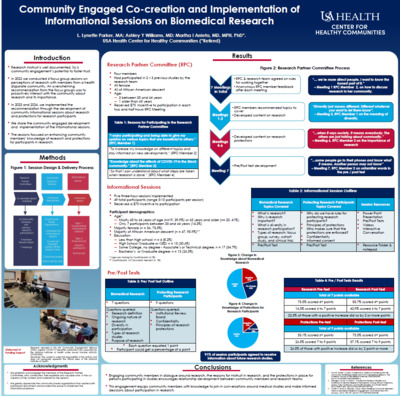
Community engaged co-creation and implementation of informational sessions on biomedical research
L. Lynette Parker, Ashley Y Williams MD, and Martha I. Arrieta PhD
Objectives/Goals: Research mistrust is well documented. So is community engagement’s potential to foster trust. We share the community engaged development and implementation of informational sessions on research and the protections for participants, aiming at enhancing community members’ knowledge of research. Methods/Study Population: Drawing from a pool of community members who had participated in research projects with a community engaged (CE) research center, we established a four-member Research Partner Committee (RPC) to work with the Center’s research team (CE Team) in the co-creation of materials for an informational session covering two main topics: the fundamentals of biomedical research and of protections for research participants.. The RPC and CE Team also co-developed two sets of pre- and post-tests to evaluate knowledge acquisition at session implementation. Community partners assisted in recruiting their constituents to participate in the sessions and provided convenient sites for the presentations. Results/Anticipated Results: The CE Team and RPC met 7 times to co-create the research and protections presentations (e.g., research definition, importance, inclusion of diverse populations, reasons we have protections, Institutional Review Boards, and informed consent). They also co-developed a 7- and a 9- item pre-post test, respectively. Five informational sessions, implemented by the CE Team with RPC members as observers drew 49 participants (96% African American, 73% female). 55.1% and 75.5% of participants showed a positive change in knowledge after the research and the protections presentations, respectively. 91% agreed to be notified about future research studies at the center. Discussion/Significance of Impact: Engaging community members in dialogue around research and the reasons for mistrust in research encourages relationship development. This engagement equips community members with knowledge to join in conversations around medical studies and make informed decisions about participation in research.
-
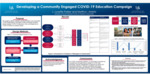
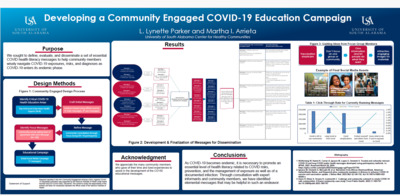
Developing a Community Engaged COVID-19 Education Campaign
L. Lynette Parker and Martha I. Arrieta PhD
Purpose: We sought to define, evaluate, and disseminate a set of essential COVID health literacy messages to help community members wisely navigate COVID-19 exposures, risks, and diagnoses as COVID-19 enters its endemic phase.
Design Methods: Key Informant interviews with medical professionals and Focus Groups (FG) with community members identified critical COVID-19 health education areas. Evidence-based initial messages were developed for each educational area. Another round of community member FGs evaluated the messages for relevance, value, and clarity. Community surveys are being deployed to gauge broad knowledge of the messages prior to implementation of a tailored dissemination campaign.
Results/Expected Results: The expert (n = 8) and community consultation (5 FG, n = 18 participants) identified seven themes, including 34 simple messages about COVID’s continued spread (2), severe disease risk (3 major messages and 7 sub-messages), caring for self and others (4), mitigating virus spread (4), long COVID (3), vaccination (1), handling a COVID exposure (6), and dealing with a COVID diagnosis (4). Survey deployment ascertains the level of agreement by community members with each of the messages, to identify which themes and messages will become the focus of a subsequent educational campaign.
FG participants demonstrated varied levels of experience and concern with COVID. Items of special interest for dissemination were information related to Long COVID and available treatments for people with COVID. There was a high level of skepticism regarding COVID vaccination. Overall, FG participants agreed that the messages identified were important and should be disseminated.
Discussion/Conclusion: As COVID becomes endemic, it is necessary to promote an essential level of health literacy related to COVID risks, prevention, and the management of exposure as well as of a documented infection. Through consultation with expert informants and community members, we have identified elemental messages that may be helpful in such an endeavor.
Grant Support: Research reported in this NIH Community Engagement Alliance (CEAL) Against COVID-19 Disparities publication was supported by the National Institutes of Health under Award Number 6922-03-COVID-S002. Disclaimer: The content is solely the responsibility of the authors and does not necessarily represent the official views of the National Institutes of Health.
Printing is not supported at the primary Gallery Thumbnail page. Please first navigate to a specific Image before printing.