


Shelby Hall Graduate Research Forum Posters
Files
Download Full Poster (641 KB)
Description
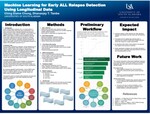
Acute Lymphoblastic Leukemia (ALL) is a blood cancer in which immature white blood cells grow uncontrollably in the bone marrow and blood. Although treatment has improved, relapse remains a major clinical challenges. One of the most important predictors of relapse is minimal residual disease (MRD), which refers to small numbers of leukemia cells that remain after treatment but cannot be detected by standard microscopic examination. Sensitive methods such as flow cytometry, PCR, and next-generation sequencing (NGS) are used to detect MRD, which is one of the strongest indicators of relapse risk and patient outcome in ALL.
This study aims to address these limitations by developing a machine learning–based system to analyze longitudinal biomarker data (tracking how patient biomarkers change over time) and identify early signs of relapse in Acute Lymphoblastic Leukemia (ALL).
Publication Date
3-2026
Department
Mechanical, Aerospace, & Biomedical Engineering
City
Mobile
Disciplines
Analytical, Diagnostic and Therapeutic Techniques and Equipment | Biological Phenomena, Cell Phenomena, and Immunity | Biomedical Engineering and Bioengineering | Computer and Systems Architecture | Computer Sciences | Databases and Information Systems | Data Science | Data Storage Systems | Oncology
Recommended Citation
Chung, Elaine, "Machine Learning for Early ALL Relapse Detection Using Longitudinal Data" (2026). Shelby Hall Graduate Research Forum Posters. 45.
https://jagworks.southalabama.edu/southalabama-shgrf-posters/45
Included in
Analytical, Diagnostic and Therapeutic Techniques and Equipment Commons, Biological Phenomena, Cell Phenomena, and Immunity Commons, Biomedical Engineering and Bioengineering Commons, Computer and Systems Architecture Commons, Databases and Information Systems Commons, Data Science Commons, Data Storage Systems Commons, Oncology Commons