


Shelby Hall Graduate Research Forum Posters
Files
Download Full Poster (375 KB)
Description
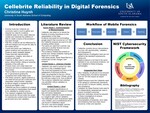
Forensic tools like Cellebrite are commonly used in court to gather and interpret raw data for evidence. Cellebrite does not only collect data but creates and interprets the artifacts of data to create a scene of the process it has been through. With this, evidence can be influenced by software designs and not just the data on the mobile device. Courts and police use Cellebrite to gather evidence and reconstruct it to create an easily readable dataset. These tools lack reproducibility, transparency, integrity, and chain of evidence command. Cellebrite is often used in court and by police without further vetting or ensuring reliability of the software. Forensic tools work under black-box forensics and have no transparency into the process. There is little to no current cybersecurity law or governance guiding the companies that create these tools. With these concerns, digital evidence is not observed but put into a software and interpreted without further validation. Evidence integrity is needed for both physical and digital works. Cellebrite has shown patterns of creating skewed data for interpretation that needs to be validated by another source. This research suggests that forensic tools should be viewed under the scope of cybersecurity systems that must follow government laws and validation.
Publication Date
3-2026
Department
Computer Science
Disciplines
Cybersecurity | Data Science | Law | Other Computer Sciences
Recommended Citation
Huynh, Christina, "Cellebrite Reliability in Digital Forensics" (2026). Shelby Hall Graduate Research Forum Posters. 40.
https://jagworks.southalabama.edu/southalabama-shgrf-posters/40
Included in
Cybersecurity Commons, Data Science Commons, Law Commons, Other Computer Sciences Commons